

If you have ever searched “what does a speech pathologist do”, you are likely looking for a clear answer, not medical jargon. In Canada, a speech pathologist, often called a speech-language pathologist or SLP, helps people communicate more clearly, understand language, use their voice safely, and swallow more safely. From my experience working with families and adults navigating communication concerns, many people wait too long because they think speech therapy is only for children who cannot say certain sounds. In reality, speech-language pathology is much broader.
Speech pathologists support toddlers, school-age children, teens, adults, and older adults. They may help a toddler start using more words, a child understand classroom instructions, a teen manage stuttering, an adult recover communication after a stroke, or a senior eat and drink more safely. Therefore, their work can affect school success, family connection, workplace confidence, independence, and quality of life.
In Canada, SLPs work in many settings, including private clinics, hospitals, schools, rehabilitation centres, community health programs, long-term care homes, and virtual care. The right service depends on the person’s age, needs, goals, and access to care in their province or territory.
Table of Contents
- What Does a Speech Pathologist Do?
- What Does a Speech Pathologist Do in Canada?
- Speech, Language, Voice, Fluency, and Swallowing Explained
- Who Can Benefit From Seeing a Speech Pathologist?
- What Happens During a Speech Pathology Assessment?
- What Does Speech Therapy Look Like?
- Canadian Service Settings: Public, School, Hospital, and Private Care
- Comparison Table: In-Person vs Virtual Speech Therapy
- Checklist: How to Start With a Speech Pathologist
- People Also Ask
- Expert Q&A
- Conclusion
What Does a Speech Pathologist Do?
A speech pathologist assesses and treats communication and swallowing difficulties. In Canada, SLPs help children and adults with speech sounds, language, stuttering, voice, social communication, reading-related language skills, and swallowing safety. They create practical therapy plans, coach families, and collaborate with schools, doctors, and care teams.
What Does a Speech Pathologist Do in Canada?
A speech pathologist helps people communicate and participate in daily life. According to Speech-Language & Audiology Canada, speech-language pathologists support much more than lisps or stutters. Their scope includes communication and swallowing needs linked to development, injury, illness, hearing concerns, neurological conditions, and aging.
In simple terms, an SLP asks three core questions:
Can this person communicate what they want, need, think, and feel?
Can this person understand others well enough for daily life, school, work, or relationships?
Can this person eat, drink, speak, and use their voice as safely and effectively as possible?
Those questions may sound simple. However, the answers can involve many areas of the brain, mouth, throat, breathing system, hearing system, muscles, memory, attention, emotions, and environment. As a result, SLPs combine science with practical coaching.
For example, a child may not be talking much at age two. The SLP may look at play skills, attention, understanding, gestures, sound use, family routines, hearing history, and interaction style. Then, therapy may focus on helping the child communicate during snack, bath time, story time, and play, rather than only practising flashcards.
Similarly, an adult after a stroke may know what they want to say but struggle to find words. The SLP may assess language, speech clarity, reading, writing, swallowing, and communication supports. Therapy may include word-finding strategies, conversation practice, family education, and tools such as communication boards or phone-based supports.
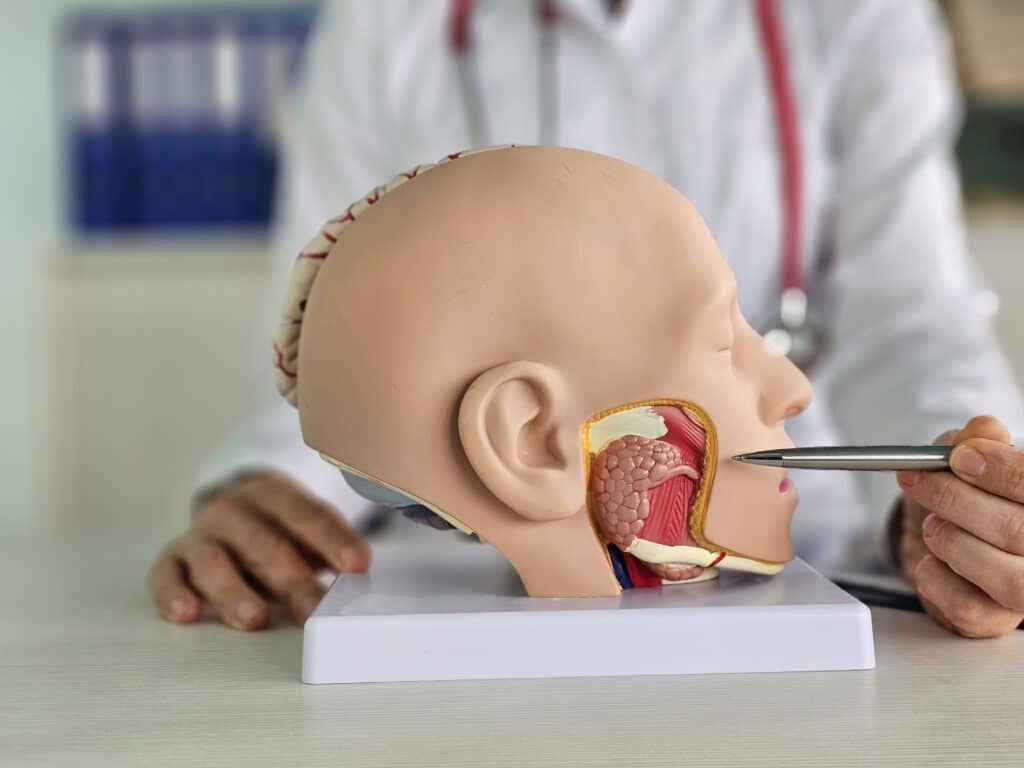
Speech, Language, Voice, Fluency, and Swallowing Explained
To understand what a speech pathologist does, it helps to separate the main areas they assess and treat.
Speech
Speech is how sounds are produced. It includes how the lips, tongue, jaw, palate, breathing, and voice work together. A child with a speech sound disorder may say “tat” for “cat” or be hard to understand. An adult with dysarthria after a neurological condition may speak softly, slowly, or unclearly.
A speech pathologist can identify which sounds are difficult, why they may be difficult, and how to practise them in a way that builds real-life clarity. For children, therapy often includes play-based practice and parent coaching. For adults, it may include breath support, pacing, articulation strategies, and functional speaking tasks.
Language
Language is the system we use to understand and express meaning. It includes vocabulary, grammar, sentence structure, storytelling, following directions, asking questions, and understanding concepts. It also includes written language foundations, such as comprehension and narrative skills.
A child with language difficulties may use short sentences, struggle to answer questions, or have trouble following classroom instructions. An adult with aphasia may have trouble speaking, understanding, reading, or writing after a stroke or brain injury.
Therefore, speech pathologists often work on language in practical contexts. They may help a preschooler use two-word phrases, a school-age child retell a story, or an adult rebuild communication for daily routines.
Fluency
Fluency refers to the smooth flow of speech. Stuttering is the best-known fluency difficulty. It may involve repetitions, stretched sounds, blocks, tension, or avoidance of speaking situations.
A speech pathologist does not simply tell someone to “slow down.” Instead, they assess how stuttering affects communication, confidence, participation, and daily life. Therapy may include fluency strategies, stuttering management, education, confidence-building, and support for parents, teachers, or partners.
Voice
Voice is the sound produced by the vocal folds and shaped by the throat, mouth, and breathing system. Voice concerns may include hoarseness, vocal fatigue, strain, pitch concerns, reduced loudness, or voice loss.
A speech pathologist may support healthy voice use, especially after medical review when needed. For example, teachers, singers, call-centre workers, and public speakers may need strategies to reduce strain. In some cases, SLPs also support gender-affirming voice and communication goals.
Social Communication
Social communication is how people use language in interaction. It includes taking turns, understanding body language, adjusting communication for different people, staying on topic, making inferences, and understanding hidden meanings.
Some autistic people, people with ADHD, and people with social communication differences may work with an SLP. However, good therapy should not aim to erase personality or force masking. Instead, it should support functional communication, self-advocacy, relationship skills, and participation in ways that respect the person.
Swallowing
Swallowing difficulties are also within the SLP’s role. The Canadian National Occupational Classification describes speech-language pathologists as professionals who diagnose, assess, and treat communication disorders, including speech, fluency, language, voice, and swallowing disorders.
Swallowing concerns may happen after stroke, brain injury, surgery, cancer treatment, dementia, Parkinson’s disease, or other medical conditions. Signs can include coughing during meals, wet-sounding voice after drinking, frequent chest infections, unexplained weight loss, or food sticking. Because swallowing safety can affect health, assessment may involve collaboration with physicians, dietitians, nurses, occupational therapists, and other care providers.
Who Can Benefit From Seeing a Speech Pathologist?
People often ask, “Is my concern big enough to see an SLP?” In many cases, an assessment can clarify whether therapy is needed, whether monitoring is enough, or whether another referral may help.
Toddlers and Preschoolers
A toddler may benefit from seeing a speech pathologist if they are not using many words, are hard to understand, do not seem to understand simple directions, rarely gestures, loses skills, or becomes frustrated when trying to communicate.
Early support matters because communication grows through everyday interaction. For instance, an SLP may coach parents to model simple words, pause expectantly, follow the child’s interests, and create communication opportunities during routines. Consequently, therapy becomes part of daily life rather than a once-a-week activity only.
School-Age Children
School-age children may need support with speech clarity, vocabulary, grammar, storytelling, reading comprehension, social communication, or following instructions. These skills can affect classroom learning, friendships, confidence, and behaviour.
For example, a child who “doesn’t listen” may actually have difficulty understanding long instructions. Another child who avoids reading may have language-based comprehension challenges. Therefore, a speech pathologist may work with teachers, families, and other professionals to connect communication goals with school participation.
Teens
Teens may see an SLP for stuttering, voice concerns, social communication, language learning, concussion recovery, or communication confidence. At this age, therapy should feel respectful and goal-based. A teen may want to order food independently, speak in class, prepare for job interviews, or explain ideas more clearly.
Adults
Adults may benefit from speech pathology after stroke, traumatic brain injury, concussion, Parkinson’s disease, multiple sclerosis, dementia, cancer treatment, surgery, or voice injury. Others may seek support for stuttering, accent modification for communication clarity, professional voice use, or public speaking confidence.
Importantly, accent modification is not about removing someone’s identity. It should be client-led and focused on intelligibility, confidence, and communication goals.
Older Adults
Older adults may need SLP support for swallowing, memory-related communication changes, voice volume, word-finding, or communication after neurological illness. Family education is often essential. For example, communication partners may learn to use shorter sentences, give extra response time, reduce background noise, and confirm understanding without taking over.
What Happens During a Speech Pathology Assessment?
An assessment is the starting point. It helps the SLP understand the person’s strengths, needs, environment, and goals. Although each assessment is different, most include a mix of interview, observation, formal tools, informal tasks, and practical discussion.
From my experience, the best assessments feel collaborative. The SLP should listen to what matters to the person and family, not just complete a checklist.
An assessment may include:
- Case history, including medical, developmental, school, or work background
- Hearing, vision, or medical considerations when relevant
- Observation during play, conversation, reading, meals, or daily routines
- Speech sound testing
- Language comprehension and expression tasks
- Voice, fluency, or social communication review
- Swallowing screening or referral for instrumental assessment when needed
- Goal discussion with the client, family, or care team
- Recommendations for therapy, home practice, referrals, or monitoring
After assessment, the SLP should explain findings in plain language. They may provide a written report, therapy plan, home strategies, referrals, or school recommendations.
What Does Speech Therapy Look Like?
Speech therapy is not one-size-fits-all. It should be based on assessment results, evidence-informed practice, client priorities, and real-life needs.
Therapy for Children
For young children, therapy may look like play. However, play-based therapy is not “just playing.” The SLP uses carefully chosen strategies to build communication during motivating activities.
For example, if a child loves cars, the SLP may model words like “go,” “stop,” “more,” “fast,” and “crash.” They may pause so the child has a chance to communicate. They may coach parents to repeat key words, expand what the child says, and create reasons to request or comment.
For older children, therapy may include structured practice, games, storytelling, classroom-related tasks, reading support, and conversation practice. As goals improve, practice usually moves from therapy activities into real life.
Therapy for Adults
Adult therapy often focuses on function. For example, a person with aphasia may practise ordering coffee, texting a family member, reading medication labels, or telling a story. A person with Parkinson’s disease may work on speaking louder and clearer. A person with voice strain may learn vocal hygiene, breath support, and safer voice techniques.
In addition, family or caregiver training can be just as important as direct therapy. Communication changes affect relationships. Therefore, therapy may include strategies for both the person and their communication partners.
Home Practice
Progress usually depends on what happens between sessions. A good SLP gives realistic home practice. That may mean five minutes a day, practice during meals, one conversation strategy, or a few sound targets in common words.
The key is consistency. However, practice should not overwhelm the family or client. If a plan feels impossible, it should be adjusted.
What Does a Speech Pathologist Do Differently From Other Professionals?
Speech pathologists often collaborate with other professionals. However, their role is distinct.
An audiologist focuses on hearing and balance. An occupational therapist may support daily living skills, sensory needs, feeding routines, or fine motor skills. A psychologist may assess learning, behaviour, mental health, or cognition. A teacher supports curriculum and classroom learning. A physician or nurse practitioner manages medical diagnosis and treatment.
A speech pathologist focuses on communication and swallowing. Because these areas overlap with health, learning, and daily participation, collaboration is common.
For example, a child with feeding concerns may need both an SLP and an occupational therapist. An adult after a stroke may need an SLP, physiotherapist, occupational therapist, physician, dietitian, and social worker. As a result, families should not be surprised when an SLP recommends a team approach.
Canadian Service Settings: Public, School, Hospital, and Private Care
In Canada, where you access a speech pathologist often depends on age, need, urgency, province or territory, and local waitlists. The Government of Canada Job Bank notes that audiologists and speech-language pathologists may work in hospitals, community and public health centres, extended care facilities, day clinics, rehabilitation centres, educational institutions, and private practice.
Public Health and Community Programs
Some children access SLP services through public health, preschool programs, or community agencies. Availability varies by region. There may be eligibility criteria and waitlists. However, public programs can be valuable, especially for early identification and family coaching.
Schools
School-based SLPs often support communication skills that affect learning and participation. They may assess language, speech, fluency, social communication, and classroom communication needs. They may consult with teachers, provide direct therapy, support individualized education planning, or suggest classroom strategies.
However, school services may focus on educational impact. Therefore, a child may receive different recommendations in school than in private therapy.
Hospitals and Rehabilitation Centres
Hospital and rehab SLPs often support adults and children with medical or neurological needs. This can include stroke recovery, brain injury, swallowing safety, voice after surgery, or communication after illness. In these settings, therapy may be part of a larger care plan.
Long-Term Care
In long-term care, SLPs may help with swallowing, dementia-related communication, mealtime safety, staff training, and quality of life. They may also help families understand communication changes and supportive strategies.
Private Practice
Private speech therapy can offer faster access, flexible scheduling, virtual care, and family-centred goals. Fees and coverage vary. Some extended health benefits may cover speech-language pathology, but families should check their plan.
For families looking for support, personalized speech therapy services in Canada can be a practical next step when communication concerns are affecting daily life, learning, confidence, or safety.
Comparison Table: In-Person vs Virtual Speech Therapy
| Option | Best For | Advantages | Limitations | Canadian Access Notes |
| In-person speech therapy | Hands-on assessment, young children, complex speech or swallowing needs | Direct observation, easier use of physical materials, helpful for some children | Travel time, location limits, scheduling barriers | Availability depends on local clinics, schools, hospitals, and public programs |
| Virtual speech therapy | Parent coaching, language therapy, fluency, adult communication goals, many follow-ups | Convenient, accessible from home, easier for rural families | Not ideal for every assessment or swallowing concern | The SLP must follow provincial/territorial registration and practice requirements |
| Hybrid care | Families who need flexibility | Combines direct assessment with convenient follow-up | Requires planning and technology | Often useful when goals can be practised at home |
| Team-based care | Medical, developmental, or complex needs | Supports the whole person | May require multiple appointments | Common in hospitals, rehab, schools, and specialized clinics |
Checklist: How to Start With a Speech Pathologist
- Write down your main concern.
Start with what you notice in daily life. For example, “My child is hard to understand,” “I cough when drinking,” or “I can’t find words after my stroke.” - Collect relevant background.
Include medical history, developmental milestones, school concerns, hearing tests, previous reports, or examples of communication challenges. - Check urgency.
Sudden speech, language, facial weakness, confusion, or swallowing changes can be medical red flags. Seek urgent medical care when symptoms are sudden or severe. - Look at service options.
Consider public programs, school services, hospital referrals, employee benefits, private practice, and virtual therapy. - Ask about registration.
In regulated provinces, confirm that the clinician is registered with the appropriate provincial college. This is an administrative check, not legal advice. - Book an assessment.
An assessment helps identify strengths, needs, and next steps. It may show that therapy is needed, or it may offer strategies and monitoring. - Clarify goals.
Good goals should connect to daily life. For instance, “Use two-word phrases during play” is more useful than “Improve language.” - Plan home practice.
Ask what to do between sessions. Small, regular practice often works better than long, stressful practice. - Review progress.
Therapy should change as the person improves. Ask how progress will be measured and when goals will be updated. - Stay collaborative.
Share what is working and what is not. The best therapy plan is realistic for the person, family, and setting.
Common Signs You May Need a Speech Pathologist
Although every person develops and recovers differently, some signs suggest it may be time to ask for help.
For young children, watch for limited babbling, few words, trouble following simple directions, frustration when communicating, loss of skills, or speech that is very hard to understand.
For school-age children, signs may include difficulty telling stories, trouble learning new words, unclear speech, reading comprehension concerns, social communication challenges, or ongoing stuttering.
For adults, signs may include word-finding problems, slurred speech, hoarseness, vocal fatigue, coughing during meals, difficulty swallowing pills, communication changes after concussion, or trouble returning to work communication demands.
For older adults, signs may include increased coughing with food or drinks, reduced voice volume, communication changes after stroke, dementia-related conversation difficulties, or withdrawal from social situations.
However, signs alone do not provide a diagnosis. An SLP assessment helps clarify what is happening and what support is appropriate.
Why Early Support Matters
Early support can reduce frustration and build confidence. In children, communication affects play, behaviour, learning, friendships, and emotional development. When a child cannot express needs, they may cry, avoid, grab, or act out. Therefore, helping communication can also improve daily routines.
For adults, timely support can improve independence and participation. After a stroke, for example, communication therapy can help a person reconnect with family, manage appointments, and take part in decisions. For swallowing concerns, timely assessment can support safer eating and drinking plans.
Early support does not mean panic. Rather, it means getting clear guidance. Sometimes the answer is reassurance and monitoring. Other times, therapy can begin before challenges become more stressful.
What Makes a Good Speech Therapy Plan?
A good therapy plan is clear, realistic, and meaningful. It should include goals, strategies, expected practice, and a way to measure progress.
For example, a vague goal might be “improve speech.” A stronger goal would be “produce the /k/ sound in short words during play and conversation with adult support.” Another vague goal might be “improve communication.” A stronger adult goal would be “use word-finding strategies to explain basic needs during medical appointments.”
Good therapy also respects culture, language, neurodiversity, family priorities, and the person’s own goals. In Canada, many families are multilingual. An SLP should consider all languages used at home. Speaking more than one language does not cause a language disorder. Therefore, families should not stop using their home language unless a qualified professional gives a clear, individualized reason.
What Does a Speech Pathologist Do During Parent or Caregiver Coaching?
Parent and caregiver coaching is a major part of speech pathology. This is because communication happens all day, not only during appointments.
An SLP may coach caregivers to:
- Wait longer so the person has time to respond
- Use shorter, clearer sentences
- Model words without pressure
- Offer choices
- Expand what the person says
- Reduce background noise
- Use visual supports
- Encourage safe swallowing strategies
- Support communication without speaking for the person
For toddlers, coaching may happen during play. For adults, it may happen during conversation, meals, or daily routines. In both cases, the goal is to make communication easier in real life.
What Does a Speech Pathologist Do for Swallowing?
Swallowing care is one of the most misunderstood parts of speech pathology. An SLP may assess how a person manages food, liquids, saliva, and pills. They may look at coughing, throat clearing, voice quality, chewing, fatigue, positioning, and medical history.
Depending on the situation, the SLP may recommend strategies such as posture changes, pacing, texture changes, swallowing exercises, oral care routines, or referral for further medical assessment. In hospitals, SLPs may work closely with the medical team. In long-term care, they may train staff and support mealtime safety.
Swallowing recommendations should be individualized. They should also consider nutrition, hydration, comfort, dignity, culture, and quality of life.
What Does a Speech Pathologist Do for Adults After Stroke?
After a stroke, an SLP may help with aphasia, dysarthria, apraxia of speech, cognitive-communication difficulties, and swallowing. Aphasia affects language. Dysarthria affects muscle control for speech. Apraxia of speech affects planning speech movements. Cognitive-communication difficulties may affect attention, memory, organization, and problem-solving in conversation.
Therapy may include direct practice, compensatory strategies, communication partner training, reading and writing support, and functional tasks. For example, a person may practise making phone calls, using a calendar, telling a personal story, or participating in family decisions.
Recovery can vary widely. Therefore, therapy should be adjusted over time and based on meaningful goals.
What Does a Speech Pathologist Do for Children With Autism?
For autistic children, an SLP may support communication in many forms. This can include spoken language, gestures, signs, pictures, communication devices, play, social understanding, self-advocacy, and emotional expression.
Respectful therapy does not try to make autistic children appear non-autistic. Instead, it supports communication access, regulation, connection, choice-making, and participation. Some children need help using first words. Others need support with conversation, flexible language, understanding social situations, or using augmentative and alternative communication.
Family priorities matter. So does the child’s comfort and autonomy.
What Does a Speech Pathologist Do With AAC?
AAC stands for augmentative and alternative communication. It includes tools and strategies that support communication when speech is limited or unreliable. AAC can be low-tech, such as pictures, gestures, writing, or communication boards. It can also be high-tech, such as speech-generating devices or tablet-based systems.
An SLP may assess whether AAC would help, choose vocabulary, teach the person and family how to use it, and support use across home, school, work, or community settings.
AAC does not stop speech development. In fact, for many people, it reduces frustration and gives them a way to communicate more successfully.
People Also Ask
What does a speech pathologist do for a child?
A speech pathologist helps a child build communication skills such as understanding words, using sentences, saying sounds clearly, taking turns, and expressing needs. Therapy may include play, structured practice, parent coaching, and school collaboration.
Do I need a doctor’s referral to see a speech pathologist in Canada?
For many private speech therapy services, you can contact an SLP directly. However, hospitals, public programs, insurance plans, or specialized services may require a referral, so it is best to check the rules for your province, program, or benefits provider.
Is a speech pathologist the same as a speech therapist?
In everyday language, many people use “speech therapist” and “speech pathologist” to mean the same thing. In Canada, the professional title is commonly speech-language pathologist, or SLP.
What does a speech pathologist do for adults?
A speech pathologist helps adults with communication, speech clarity, voice, stuttering, cognitive-communication, and swallowing concerns. Adults may need SLP support after stroke, concussion, brain injury, surgery, neurological disease, or voice strain.
How long does speech therapy take?
The length of therapy depends on the person’s goals, age, diagnosis, practice consistency, and support needs. Some people need a few sessions for coaching, while others benefit from longer-term therapy and periodic reviews.
Expert Q&A
1. Can a speech pathologist diagnose a communication disorder?
Yes, speech-language pathologists assess and diagnose many communication and swallowing disorders within their professional scope. However, some situations also require medical, psychological, educational, or audiological assessment, especially when symptoms are complex.
2. What should I bring to a first speech pathology appointment?
Bring any relevant reports, hearing test results, medical information, school documents, examples of concerns, and your top goals. For children, videos of communication at home can also help because children may behave differently in a clinic.
3. Can speech therapy help if my child understands everything but does not talk much?
Yes, it can help. Understanding and talking are related but different skills. An SLP can assess expressive language, play, gestures, speech sounds, oral-motor factors, interaction patterns, and other areas that may affect spoken communication.
4. What does a speech pathologist do if someone has trouble swallowing?
The SLP assesses swallowing safety and function, then recommends strategies or referrals based on the person’s needs. This may include posture changes, food or liquid texture recommendations, exercises, pacing, caregiver training, or medical team collaboration.
5. How do I know if a speech pathologist is qualified in Canada?
Qualification and registration requirements vary by province or territory. You can ask about the clinician’s credentials, provincial registration where applicable, clinical experience with your concern, and whether they provide assessment, treatment, reports, and progress updates.
Conclusion
So, what does a speech pathologist do? A speech pathologist helps people communicate, connect, learn, work, eat, drink, and participate more fully in daily life. In Canada, SLPs support children and adults with speech sounds, language, stuttering, voice, social communication, cognitive-communication, AAC, and swallowing.
The most important takeaway is that speech therapy is practical. It is not only about perfect sounds or worksheets. It is about helping a toddler ask for help, a child understand a story, a teen speak with confidence, an adult recover words after stroke, or an older adult eat more safely.
If communication or swallowing concerns are affecting daily life, the next step is to get clear guidance. A thoughtful assessment can show what is happening, what support is needed, and how to move forward with confidence.
Tags: is being a speech pathologist worth it, what does a speech language pathologist do, what does a speech language therapist do, what does a speech pathologist do, what does a speech pathologist do australia, what does a speech pathologist do for autism, what does a speech pathologist do in a hospital, what does a speech pathologist do in schools, what does a speech pathologist do on a daily basis, what does a speech therapy do