

Finding a paediatric speech pathologist can feel urgent, emotional, and confusing, especially when you are worried about your child’s speech, language, feeding, fluency, or social communication. From my experience reviewing family-focused speech therapy content, parents usually want two things first: a clear explanation of what is happening and a practical next step they can trust.
In Canada, speech-language pathologists are trained health professionals who assess and treat communication and swallowing concerns. They may support toddlers with late talking, preschoolers with unclear speech, school-age children with language or literacy challenges, and children who need help with feeding or swallowing. Speech-Language & Audiology Canada explains that speech-language pathologists identify, diagnose, and treat communication and swallowing disorders across the lifespan.
This guide explains what a paediatric speech pathologist does, when to consider an assessment, how services usually work in Canada, and how families can prepare for therapy without feeling overwhelmed.
Table of Contents
- Definition
- What Does a Paediatric Speech Pathologist Do?
- Why Families in Canada Search for Paediatric Speech Pathologist Support
- Common Signs Your Child May Benefit From Speech Therapy
- Speech, Language, Feeding, and Social Communication Explained
- How Paediatric Speech Pathologist Assessments Work in Canada
- Private, Public, School, and Virtual Services Compared
- How to Choose a Paediatric Speech Pathologist
- Numbered Checklist: Preparing for Your First Appointment
- What Happens During Therapy?
- Canada-Specific Admin and Funding Considerations
- People Also Ask
- Expert Q&A
- Conclusion
Definition
A paediatric speech pathologist is a regulated communication health professional who assesses and treats children with speech, language, voice, fluency, feeding, swallowing, and social communication needs. In Canada, they help families understand a child’s strengths, identify barriers, and build practical therapy goals for everyday communication.
What Does a Paediatric Speech Pathologist Do?
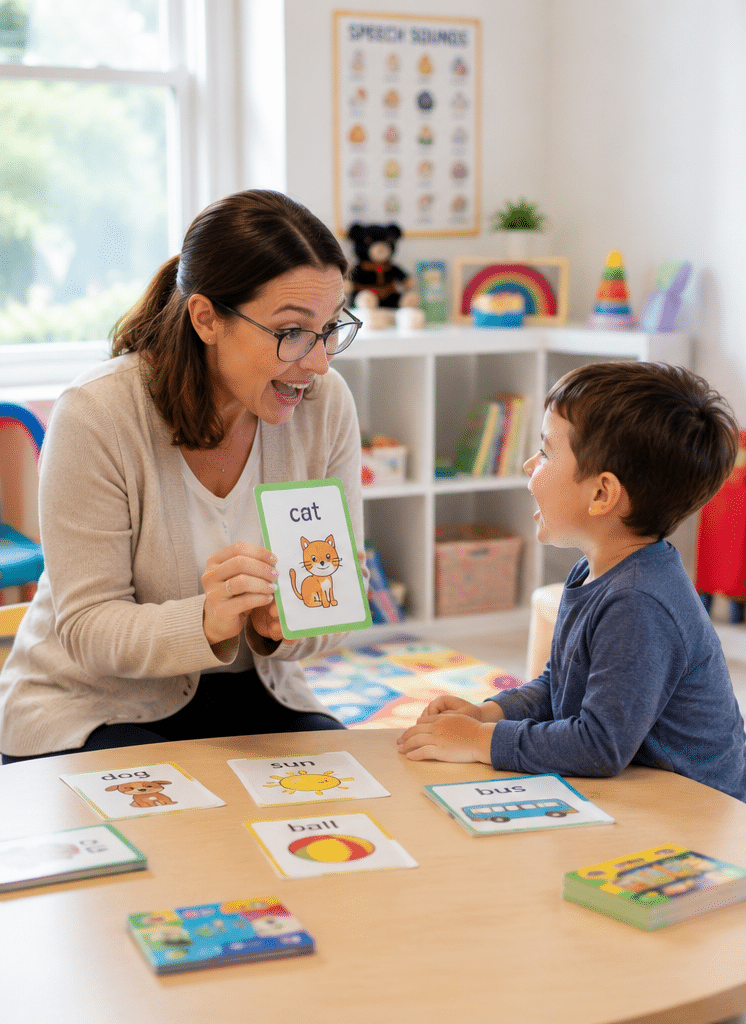
A paediatric speech pathologist, also called a paediatric speech-language pathologist or S-LP, helps children communicate more clearly, confidently, and safely. Their work is broader than “teaching children to say sounds.” It can include early language, speech clarity, stuttering, voice, literacy-related language, feeding, swallowing, and communication support for children with developmental differences.
According to Canada’s National Occupational Classification, speech-language pathologists diagnose, assess, and treat communication disorders, including speech, fluency, language, voice, and swallowing disorders. In practical family terms, this means they look at how a child understands language, uses words and sentences, produces sounds, interacts with others, and manages oral communication or feeding demands.
A paediatric speech pathologist may help with:
- Late talking in toddlers
- Speech sound errors, such as difficulty saying certain sounds
- Language delays, including trouble understanding or using words
- Stuttering or other fluency concerns
- Voice concerns, such as hoarseness
- Social communication and play-based interaction
- Feeding or swallowing challenges
- Communication support for autistic children
- Communication support for children with developmental delays, hearing differences, or motor speech needs
However, therapy is not one-size-fits-all. A good clinician considers the child’s age, developmental profile, family goals, home language, school setting, and daily routines. As a result, therapy may look like play for a toddler, structured practice for a school-age child, caregiver coaching for parents, or a combination of these.
Why Families in Canada Search for Paediatric Speech Pathologist Support
Many Canadian families search for a paediatric speech pathologist because they notice a gap between what their child is doing and what they expected for their age. For example, a parent may wonder why their toddler uses only a few words, why relatives cannot understand their preschooler, or why their child becomes frustrated during conversations.
In Canada, speech-language pathology services may be available through public health programs, hospitals, schools, community agencies, private clinics, or virtual care. Availability differs by province and territory. Therefore, the right pathway often depends on your child’s age, concern, location, urgency, and eligibility.
From my experience, families often delay booking because they are unsure whether their concern is “serious enough.” Yet early guidance can be valuable even when a child does not need long-term therapy. A paediatric speech pathologist can screen skills, explain what to watch for, suggest home strategies, and advise whether a full assessment is needed.
Speech-Language & Audiology Canada notes that early detection is important and encourages families to contact a speech-language pathologist or audiologist if they suspect a problem. That does not mean every child needs therapy immediately. Instead, it means families should feel comfortable asking questions early.
Common Signs Your Child May Benefit From Speech Therapy
Children develop at different rates. However, some patterns are worth discussing with a qualified professional. A paediatric speech pathologist can help you understand whether your child’s skills are within an expected range or whether support may help.
Consider seeking advice if your child:
- Uses fewer words than expected for their age
- Rarely combines words when peers are starting to use phrases
- Seems frustrated because they cannot express themselves
- Is hard for familiar adults to understand
- Leaves out many sounds or syllables
- Repeats sounds, syllables, or words in a way that affects communication
- Has a hoarse, strained, or unusual voice quality
- Has difficulty following directions
- Struggles to answer questions or tell simple stories
- Has feeding concerns, coughing during meals, or trouble managing textures
- Communicates less than expected with gestures, sounds, words, or AAC
- Has difficulty with social interaction, play, or back-and-forth communication
Importantly, speech therapy is not about blaming parents or forcing children to speak before they are ready. Instead, it helps identify what support will make communication easier. For some children, this may mean building words. For others, it may mean improving sound clarity, using visuals, supporting play, or introducing augmentative and alternative communication, often called AAC.
Speech, Language, Feeding, and Social Communication Explained
Many parents use the word “speech” to describe all communication. However, paediatric speech pathologist services often cover several related areas.
Speech
Speech is how sounds are produced. It includes articulation, pronunciation, motor planning, and clarity. For example, a child may say “tat” for “cat” or have difficulty producing longer words. A paediatric speech pathologist looks at whether sound patterns are typical for the child’s age and whether therapy may help.
Language
Language is how a child understands and uses words, sentences, grammar, and meaning. Receptive language means understanding. Expressive language means using language. A child may understand simple directions but struggle to use words, or they may speak in sentences but have trouble understanding questions.
Fluency
Fluency refers to the flow of speech. Stuttering may include repetitions, stretching sounds, blocks, or visible tension. Early support can help families respond calmly and reduce communication pressure.
Voice
Voice involves pitch, loudness, and quality. A hoarse or strained voice may need medical review as well as speech-language support. A paediatric speech pathologist can guide families on next steps when voice concerns affect communication.
Feeding and Swallowing
Some speech-language pathologists support feeding and swallowing because these skills use the mouth, throat, muscles, sensation, and coordination. Speech-Language & Audiology Canada states that speech-language pathologists have expertise in evaluation and intervention for swallowing and feeding disorders across the lifespan. If your child coughs during meals, avoids textures, struggles with chewing, or has a complex feeding history, professional guidance matters.
Social Communication
Social communication includes turn-taking, joint attention, play, conversation, understanding social cues, and using communication for different purposes. This area is especially important for children who find interaction difficult, including some autistic children. Therapy should be respectful, practical, and focused on meaningful communication rather than masking a child’s identity.
How Paediatric Speech Pathologist Assessments Work in Canada
A paediatric speech pathologist assessment usually starts with listening. The clinician gathers information about your child’s development, family concerns, medical history, languages used at home, daycare or school context, and what communication looks like in daily routines.
The assessment may include:
- Parent or caregiver interview
- Review of developmental and medical history
- Play-based observation
- Standardized tests, when appropriate
- Speech sound sampling
- Language comprehension and expression tasks
- Oral-motor or feeding observation, if relevant
- Teacher or daycare input, with consent
- Functional communication review
- Recommendations and goal planning
Not every child needs the same assessment tools. For example, toddlers often show their best skills through play and routines. In contrast, school-age children may complete more structured language or speech tasks. Also, bilingual and multilingual children need careful assessment that respects all languages used at home. A child should not be treated as delayed simply because they are learning more than one language.
After the assessment, the paediatric speech pathologist explains findings in plain language. Ideally, families leave with a clear understanding of the child’s strengths, areas of need, recommended goals, and what therapy may look like.
Private, Public, School, and Virtual Services Compared
Families in Canada may find paediatric speech pathologist services through different pathways. Each option has benefits and limits.
| Service pathway | Best suited for | Advantages | Possible limitations |
| Public health or community programs | Younger children, early intervention, eligible families | Often publicly funded, local referral pathways, family-centred support | Wait times may vary, eligibility may differ by region |
| School-based services | School-age children with educational communication needs | Linked to classroom learning, teacher collaboration, school routines | Service intensity may depend on school board resources and criteria |
| Hospital or rehabilitation services | Children with medical, feeding, swallowing, neurological, or complex needs | Access to multidisciplinary teams and medical context | Usually requires eligibility, referral, or specific clinical need |
| Private paediatric speech pathologist | Families seeking direct assessment, therapy, parent coaching, or shorter wait times | Flexible scheduling, targeted goals, direct family involvement | Out-of-pocket cost unless covered by benefits or funding |
| Virtual speech therapy | Families in rural areas, busy schedules, parent coaching, some therapy goals | Convenient, accessible, can involve home routines | Not ideal for every child or concern, especially some feeding assessments |
There is no single “best” option for every family. Instead, the best choice depends on your child’s needs, your location, and how quickly you need support. Some families use more than one pathway. For example, they may access school support while also seeing a private paediatric speech pathologist for extra coaching.
How to Choose a Paediatric Speech Pathologist
Choosing a paediatric speech pathologist is both a clinical and personal decision. You want someone qualified, but you also want someone who communicates clearly and respects your child.
In regulated Canadian jurisdictions, speech-language pathologists must meet professional requirements and follow standards set by their provincial regulator. For example, the College of Audiologists and Speech-Language Pathologists of Ontario states that it regulates audiologists and speech-language pathologists in Ontario and provides a public register. Families in Ontario can use the CASLPO public register to check registration.
When comparing providers, ask:
- Are you registered with the relevant provincial regulatory college?
- Do you work regularly with children my child’s age?
- Do you support my child’s specific concern?
- How do you involve parents or caregivers?
- Do you provide written recommendations?
- Can you collaborate with daycare, school, or other professionals?
- Do you offer in-person, virtual, or hybrid sessions?
- How do you measure progress?
- What can we practise at home?
It is also reasonable to ask about therapy approach. For example, some children benefit from play-based therapy, while others need structured sound practice. Some families need parent coaching more than direct child sessions. Additionally, children with complex needs may require collaboration with occupational therapists, psychologists, physicians, dietitians, educators, or audiologists.
For broader professional information, families can review Speech-Language & Audiology Canada’s public information about children’s communication health.
Numbered Checklist: Preparing for Your First Appointment
A first appointment is easier when you bring clear information. Use this checklist before meeting a paediatric speech pathologist.
- Write down your main concern.
For example, “My child is hard to understand,” or “My toddler is not using many words.” - Note when you first noticed it.
This helps the clinician understand whether the concern is new, ongoing, or changing. - List languages used at home.
Include languages spoken by parents, grandparents, siblings, caregivers, and daycare staff. - Bring hearing information if available.
Hearing affects speech and language development. If your child has had hearing tests, bring the results. - Share medical and developmental history.
Include birth history, ear infections, diagnoses, feeding concerns, surgeries, or developmental assessments. - Record examples.
Short notes or videos can help show how your child communicates at home. - Ask daycare or school for observations.
Teachers may notice patterns with peers, instructions, stories, or classroom participation. - Check insurance or funding details.
Some extended health plans cover speech-language pathology. Coverage varies, so confirm limits and receipt requirements. - Prepare your questions.
Ask what goals are realistic, how long therapy may take, and what you can do at home. - Keep expectations flexible.
The first appointment may focus on assessment, rapport, and planning rather than immediate therapy activities.
What Happens During Therapy?
Therapy depends on your child’s goals. However, effective paediatric speech pathologist support usually includes three parts: direct practice, caregiver guidance, and home carryover.
For toddlers, therapy may look like play. The clinician may coach parents to use strategies during routines such as snack time, bath time, reading, and play. For example, they may model shorter phrases, pause to invite communication, follow the child’s lead, or expand what the child says.
For preschoolers with speech sound concerns, therapy may include listening games, sound practice, word practice, and home activities. However, the goal is not just saying one sound correctly in a clinic. The bigger goal is helping the child use clearer speech in everyday conversation.
For school-age children, therapy may target storytelling, vocabulary, grammar, comprehension, social communication, literacy-related language, or fluency. As a result, collaboration with teachers can be helpful when communication affects learning.
Progress can vary. Some children make quick gains when the concern is mild and practice is consistent. Others need longer support, especially when communication needs are connected to developmental, motor, sensory, hearing, neurological, or medical factors. A trustworthy paediatric speech pathologist should avoid guaranteed outcomes and explain progress honestly.
Canada-Specific Admin and Funding Considerations
In Canada, speech-language pathology access is shaped by provincial and territorial systems. This section is general administrative information, not legal advice.
Regulation and professional titles
Speech-language pathology is regulated in many Canadian jurisdictions. This means professionals must meet registration requirements and follow standards for safe practice. In Ontario, for instance, only people registered with CASLPO can use protected titles such as “speech-language pathologist” or related variations.
Families can ask a clinician which regulatory body they belong to. This is a normal administrative question.
Referrals
Some private services do not require a doctor’s referral. CASLPO explains that speech-language pathologists practise independently within their scope, although hospital settings may require a physician’s order. Still, some insurance plans may ask for a referral for reimbursement. Therefore, check your plan before booking.
Insurance and benefits
Private speech therapy may be covered partly through extended health benefits. Coverage can vary by insurer, plan, yearly maximum, and provider requirements. Ask whether receipts need the clinician’s registration number.
Schools and public services
Publicly funded access differs by province, age, school board, and program criteria. Therefore, families may need to contact local public health, school staff, or community programs to understand available options.
Online services
Virtual paediatric speech pathologist support may help families who live far from clinics or need flexible scheduling. However, virtual care must still be appropriate for the child’s age, attention, goals, and safety needs. Feeding and swallowing concerns may require in-person or medically coordinated care.
People Also Ask
What age should a child see a paediatric speech pathologist?
A child can see a paediatric speech pathologist at any age if there are concerns about communication, feeding, swallowing, or speech clarity. You do not need to wait until school age, especially if your child is frustrated, not using expected communication, or having feeding concerns.
Is a paediatric speech pathologist the same as a speech therapist?
In everyday conversation, many people say “speech therapist.” In Canada, the professional title is usually speech-language pathologist, often shortened to S-LP or SLP. A paediatric speech pathologist is an S-LP who works with children.
Do I need a doctor’s referral for paediatric speech therapy in Canada?
Often, private speech-language pathology services do not require a doctor’s referral. However, hospitals, public programs, and insurance plans may have their own requirements. Therefore, check the clinic, program, or benefits provider before booking.
Can a paediatric speech pathologist help with feeding?
Yes, some speech-language pathologists assess and treat feeding and swallowing concerns. This may include difficulty chewing, coughing during meals, texture refusal, or safety concerns. However, complex feeding concerns may also require medical or multidisciplinary support.
How long does speech therapy take?
It depends on the child’s needs, age, goals, attendance, practice, and underlying factors. Some children need short-term coaching, while others benefit from ongoing therapy. A paediatric speech pathologist should review progress and adjust goals over time.
Expert Q&A
1. How do I know whether my child is just a late talker or needs help?
A late talker may still catch up, but it is not always possible to know without looking at the full picture. A paediatric speech pathologist considers understanding, gestures, play, social interaction, sounds, family history, hearing, and progress over time. Because early advice can reduce uncertainty, an assessment or consultation is often worthwhile.
2. Will using two languages at home cause a speech delay?
No, bilingualism or multilingualism does not cause a speech delay by itself. Children can learn more than one language, although their vocabulary may be spread across languages. A paediatric speech pathologist should ask about all languages and avoid judging a multilingual child using only one language sample.
3. What is the difference between speech delay and language delay?
Speech delay usually refers to how clearly a child says sounds and words. Language delay refers to understanding or using words, sentences, grammar, and meaning. A child can have one without the other, or both at the same time.
4. Should I correct my child every time they say a word incorrectly?
Usually, constant correction can make communication stressful. Instead, many paediatric speech pathologist strategies use modelling. For example, if your child says “tat,” you might respond, “Yes, a cat. The cat is sleeping,” so they hear the correct form without pressure.
5. What should I expect after the first assessment?
You should expect a clear explanation of your child’s strengths, needs, and recommended next steps. These may include therapy goals, home strategies, referral suggestions, school collaboration, or monitoring. If the explanation feels unclear, ask for practical examples you can use during everyday routines.
Conclusion
A paediatric speech pathologist can help families understand a child’s communication, speech clarity, language development, feeding, swallowing, fluency, and social communication needs. In Canada, these professionals play an important role across clinics, schools, hospitals, public programs, private practice, and virtual care.
The most helpful starting point is not panic. It is clear information. If something about your child’s communication or feeding feels concerning, write down examples, check hearing history if possible, and speak with a qualified professional. Early support can give families strategies, reduce frustration, and help children communicate in ways that work for daily life.
For family-centred guidance and practical support, visit trusted paediatric speech and communication support in Canada.
Tags: paediatric speech pathologist, paediatric speech pathologist adelaide, paediatric speech pathologist brisbane, paediatric speech pathologist canberra, paediatric speech pathologist gold coast, paediatric speech pathologist jobs, paediatric speech pathologist near me, paediatric speech pathologist perth, paediatric speech pathologist salary, paediatric speech pathologist toowoomba